DEFENCE

BUSINESS

RETAIL

LIFESTYLE

Controlled access in government and defence

DEFENCE

Public authorities. Police. Armed forces. Critical infrastructure. 

Some things are secured because they could cause serious harm in the wrong hands: weapons, storage media, IT components. Others are locked because they are critical to essential services: plant rooms, switchgear, installations in the field. In both cases, access rests on clearly defined authority. 

This is not only about material damage. Unauthorised access can put people at risk or disrupt essential services.
The required level of security is correspondingly high.
 

Whether it's a safe or a door, a utility room or an outdoor area: the requirement remains the same, regardless of what is being protected behind it. 

PYLOCX

The lock works. Without power or network.

Codes are entered on the PYKEY, a mobile keypad. When placed on the lock, it transfers both data and power.
No battery to replace, no cable to run. The lock keeps working when the mains or mobile networks are down.
A one-time code provides access for a single operation. A PIN provides permanent access.
 

Locking is handled by the REMOTE 2600 motor lock.  

Every opening is logged, with up to 10,000 entries available for read-out. Access remains traceable, even at sites that are rarely staffed.

𝗞𝗲𝘆 𝗱𝗮𝘁𝗮 

Model on display 

PYLOCX 2600 with PYKEY 

Authentication 

PYKEY plus one-time code or PIN 

Authorisations 

Via the PYKEY

Audit 

10,000 events 

Locking

Electronic lock with direct drive and deadbolt 

Emergency Opening 

Not provided

Power Supply 

PYKEY, rechargeable via USB-C 

Certification 

VdS Class 2, BSI-certified 


SAFELOX

The lock works. Purely mechanical.

Whoever holds the key is authorised. Where responsibilities are clearly assigned, it is the most direct form of control. 

Locking is handled by a mechanical deadbolt lock. 

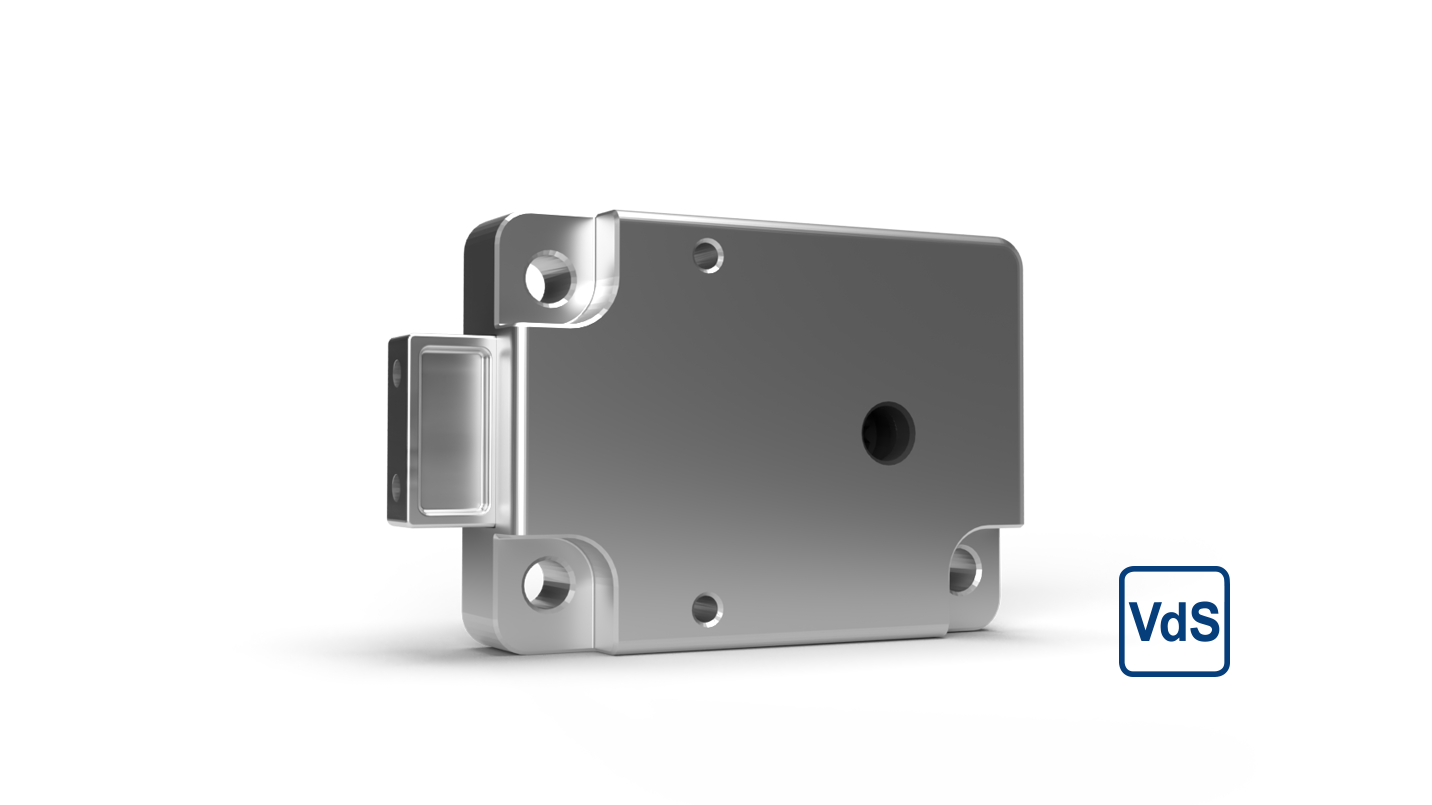
A double-bit key moves the levers. Only in the right position do they release the bolt. The classic principle of the mechanical safe lock, tested to VdS Class 3. 

𝗞𝗲𝘆 𝗱𝗮𝘁𝗮

Model on display

SAFELOX 1824  

Authentication 

Key 

Authorisations 

Via the key 

Audit 

Not provided

Locking

Mechanical lock with deadbolt 

Emergency Opening 

Not provided

Power Supply 

Not required

Certification 

VdS Class 3 


IVOX - MASTERLOX

The lock works. On its own or as part of a system.

Every lock has its own user key, whether in a single safe or as part of a system. In a master-key system, a master key also opens every lock. Whoever uses a compartment opens their own. Whoever is responsible for the system opens them all. 

Locking is handled by a mechanical deadbolt lock. 

The number of levers determines the VdS class, from Class 1 to Class 3.
The lock case remains the same across all classes. So do the cut-out and mounting hole pattern.
VdS certification applies to the individually keyed version. 

𝗞𝗲𝘆 𝗱𝗮𝘁𝗮

Model on display 

IVOX, individually keyed and master-keyed 

Authentication 

Key 

Authorisations 

Via the key; in a master-key system via user key or master key

Audit 

Not provided

Locking

Mechanical lock with deadbolt 

Emergency Opening 

Not provided

Power Supply 

Not provided

Certification 

VdS Class 1 to 3; the master-keyed version is not certified 


Controlled access in business and industry

BUSINESS

Banks. Insurers. Data centres. Manufacturing. Logistics.

In a company, access follows the organisational structure. What matters is the person's role. The safe opens when the task requires it and the necessary authorisations are in place.

Alongside protection against burglary and robbery comes the question of traceability. It must be possible to establish who had access and when, for internal audit as well as for the insurer. 

Where high-value assets or sensitive operations are involved, access is subject to additional conditions.
Two people must open together. Or a code is valid for a single opening within a set time window. 

Control is not a matter of checking afterwards. It is part of the operation itself. 

ANCHOR OTC

The lock requires a one-time code. For every opening. 

The code is valid within a set time window and expires once used. Codes are generated in the app and entered on the PRIMOR SI input unit.

Locking is handled by the ANCHOR OTC 7000 hybrid lock. 

Whoever opens the safe does not need permanent authorisation. The code is generated for a single operation, without requiring a permanent user profile. Access remains limited to the operation for which it was granted. 

𝗞𝗲𝘆 𝗱𝗮𝘁𝗮

Model on display 

ANCHOR OTC 7000 with PRIMOR SI input Unit

Authentication 

One-time code 

Authorisations 

Unlimited, managed via the app 

Audit 

Code and key operations are audited: 60 events with date and time
(interface cable required) 

Locking

Hybrid lock with a spring-loaded deadbolt 

Emergency Opening 

optional by key

Power Supply 

Battery powered 

Certification 

In preparation 

ENCRY

The lock requires two people. For one opening.

Two ENCRY locks secure one safe, each with its own code. Only when both codes have been entered is access granted. One-time codes can also be used. 

Codes are entered on the ENCRY DS input unit. The digits 0 to 9 appear on the display and are confirmed using the keys above and below. Their positions change with every entry. Anyone watching sees the movement, not the code. 

Locking is handled by the ENCRY 8000 motor locks. 

Every security-critical component is duplicated in each lock. Two systems run in parallel. One executes the command, the second stays on standby and takes over if a fault occurs. Every opening is logged, with up to 1,000 events recorded, including date and time. 

𝗞𝗲𝘆 𝗱𝗮𝘁𝗮

Model on display 

ENCRY 8000 (two-lock system) with ENCRY DS input unit 

Authentication 

Code 

Authorisations 

Code Pool: 50 codes, which can be distributed to profiles
such as user groups, managers, and one-time codes
 

Audit 

1,000 events with date and time (signal box required) 

Locking

Motor locks with push-pull deadbolt

Emergency Opening 

Via redundant system 

Power Supply 

Mains powered (power supply unit and signal box required); external power, e.g.
from an intruder alarm system (signal box required) 

Certification 

VdS Class 3 

Variants 

Single-lock and multi-lock systems, VdS Classes 2 / 4 

GATOR Hotel

The lock requires a new code. For every user.

Users choose their own code when locking the safe and use it to open it again. Once the safe is opened, the code expires and the safe is ready for the next user. A master code remains permanently stored.

Locking is handled by the GATOR 3000 motor lock.

Changing users requires no intervention at the lock. Users set their own codes, so no central administration is required. The master code gives the operator access regardless of the current user code.

𝗞𝗲𝘆 𝗱𝗮𝘁𝗮

Model on display 

GATOR Hotel with GATOR FSM input Unit 

Authentication 

Code 

Authorisations 

Changing users, 1 master 

Audit 

1,000 events with date and time (signal box required) 

Locking

Motor lock with spring-loaded deadbolt 

Emergency Opening 

Not provided

Power Supply 

Mains powered (power supply unit and signal box required); external power, e.g.
from an intruder alarm system (signal box required) 

Certification 

not certified

Controlled access in retail and hospitality

RETAIL

Food retail. Fashion. Jewellers. Pharmacies. Petrol stations. Hospitality. 

Many members of staff use the same safe. Access is based on the operational role in day-to-day business. The safe opens several times a day, across shifts. 

Alongside protection against robbery and burglary comes a second risk: the one from inside. The more staff share the same access, the harder it becomes to trace who opened the safe.

This is where the lock distinguishes one access from another.
Each user opens with their own code, and every opening is assigned to a person. Every access remains traceable, even with frequent openings. 

GATOR II

The lock distinguishes. Every access.

Whoever is on the till, whoever runs the shift, whoever manages the branch: each opens with their own code. A newly assigned code becomes valid only after it has been changed for the first time. From then on, only the person using it knows it.

Codes are entered on the GATOR DS input unit. The digits 0 to 9 appear on the display and are confirmed using the keys above and below. Their positions change with every entry. Anyone watching sees the movement, not the code. 

Locking is handled by the GATOR 3000 motor lock.

Every opening leaves a trace. The lock logs up to 1,000 events, including date and time. 

𝗞𝗲𝘆 𝗱𝗮𝘁𝗮

Model on display 

GATOR 3000 System with GATOR DS input Unit 

Authentication 

Code 

Authorisations 

Code pool: 50 codes, assignable to profiles
such as user groups, manager, administrator

Audit 

1,000 events with date and time (signal box required) 

Locking

Motor lock with a spring-loaded deadbolt 

Emergency Opening 

Optional by key

Power Supply 

Battery powered; mains powered (adapter box required); external power, e.g. from an intruder alarm system (signal box required) 

Certification 

VdS Class 2 

Variants 

System with emergency lock, multi-lock system 

ANCHOR 2600

The lock distinguishes. Even in the smallest safe.

Nine users, each with their own code, every opening logged. A lock that takes up almost no space can do the same. Its low height and slim bolt let the ANCHOR 2600 fit into the smallest of safes. 

Locking is handled by the ANCHOR 2600 electronic lock. A spindle connects it to the PRIMOR RO input unit and drives the bolt directly. 

Attacks from outside meet two barriers. Recessed screw heads make it harder to get a tool into position.
Behind them sits the integrated drill protection. 

𝗞𝗲𝘆 𝗱𝗮𝘁𝗮

Model on display 

ANCHOR 2600 System with PRIMOR RO input Unit 

Authentication 

Code 

Authorisations 

9 users, 1 master 

Audit 

60 events with date and time (interface cable required) 

Locking

Electronic lock with direct drive and deadbolt 

Emergency Opening 

Not provided

Power Supply 

Battery powered 

Certification 

VdS Class 2 

ANCHOR 7000

The lock distinguishes. Everyday use and emergencies.

In everyday use, the user’s code is enough. Codes are entered on the low-profile PRIMOR FL input unit.

Locking is handled by the ANCHOR 7000 hybrid lock. Electronic and mechanical locking share one housing.
It opens with either the code or the key.

Depending on the setting, the lock opens only after a set time delay. A silent alarm code can also be configured.
The alarm system responds, the attacker notices nothing. 

𝗞𝗲𝘆 𝗱𝗮𝘁𝗮

Model on display 

ANCHOR 7000 System with PRIMOR FL Input Unit 

Authentication 

Code 

Authorisations 

9 users, 1 master 

Audit 

Code and key operations are audited: 60 events with date and time
(interface cable required) 

Locking

Hybrid lock with a spring-loaded deadbolt 

Emergency Opening 

optional by key

Power Supply 

Battery powered 

Certification 

VdS Class 2 

Variants 

Extended audit covering 2,500 events (not certified) 

SMARTCAM

The lock distinguishes. Staff and customers.

Behind the scenes, the SMARTCAM secures staff lockers. Out front, it secures bag lockers. Customers choose their own code to lock their bags. Once the locker is opened, the code expires and the locker is ready for the next customer. For staff, up to 9 codes can be stored permanently.

Locking is handled by the cam and is operated by the knob handle.
The housing doubles as the handle, so no additional component is needed on the locker front. 

A battery powers the lock. The battery compartment is inside and secured against theft. Emergency power is therefore supplied through contact points on the outside if needed. 

𝗞𝗲𝘆 𝗱𝗮𝘁𝗮

Model on display 

SMARTCAM with integrated input unit 

Authentication 

Code 

Authorisations 

Changing users or up to 9 permanent users,
1 master code, 1 administrator, 1 facility manager 

Audit 

Not provided

Locking

Cam, turned manually by the knob handle 

Emergency Opening 

Not provided

Power Supply 

Battery powered 

Certification 

not certified

Variants 

Horizontal Design 

Controlled access in private settings

LIFESTYLE

Private households. Hunting. Target shooting. 

In private settings, access is limited to one person or a small, clearly defined group. Access is based on personal ownership. 

The main risk comes from outside: burglary and theft. For firearms, secure storage at home is required by law in many countries. 

Access follows no fixed rhythm. Weeks or months can pass between one opening and the next.
Use has to remain simple, even after a long gap. 

VISIOKEY

The lock trusts. Your face.

Two cameras calculate the depth structure, while the software evaluates RGB and infrared images.
Liveness detection checks that the authorised person is really standing there. ID cards, photographs, videos and masks are recognised as attempts at deception.
What is stored is not an image but a template of the recorded facial features, held locally. 

Locking is handled by the REMOTE 3000 motor lock. 

Setting up takes a few taps, directly on the display of the camera unit. 

𝗞𝗲𝘆 𝗱𝗮𝘁𝗮

Model on display 

VISIOKEY 3000 system with camera unit 

Authentication 

Facial recognition, two cameras, depth structure

Authorisations 

10 users with access authorisation, 1 master for system administration 

Audit 

Access and administration log 

Locking

Motor lock with a spring-loaded deadbolt 

Emergency Opening 

Optional by key

Power Supply 

Mains powered 

Certification 

In preparation 

Variants 

System with emergency lock 

FINKEY

The lock trusts. Your finger.

A single movement of the finger across the scanner is enough. The FINKEY SL scan unit is designed for flush mounting. One design, two effects: less surface for attempted break-ins, and a safe front that remains one continuous plane. 

Locking is handled by the FINKEY 7000 hybrid lock. Electronics and mechanics sit in one housing, not in two separate locks. It opens with the scanner or with the key. 

The self-learning software compares every scan with the stored template. It learns with each use and becomes more accurate. 

𝗞𝗲𝘆 𝗱𝗮𝘁𝗮

Model on display  

FINKEY 7000 system with FINKEY SL scan unit

Authentication 

Fingerprint recognition, scan unit 

Authorisations 

97 users with access authorisation, 3 masters for system administration 

Audit 

Not provided

Locking

Hybrid lock with a spring-loaded deadbolt 

Emergency Opening 

optional by key

Power Supply 

Mains powered 

Certification 

VdS Classes 1 or 2, ECB•S Class A 

AMPLISEC

The lock trusts. Your Phone

The phone transmits the authorisation to the lock via Bluetooth. There is no keypad on the safe front.
Safe sizes and lighting conditions make no difference. The safe stands where it has to stand.

Locking is handled by a swingbolt lock. 

Access rights are set in the app and can be changed at any time, without intervention at the lock.
The connection between the app and the lock is encrypted. Every opening is logged. 

𝗞𝗲𝘆 𝗱𝗮𝘁𝗮

Model on display 

AMPLISEC system, operated via the Gunnebo IQ app 

Authentication 

Phone via Bluetooth 

Authorisations 

Unlimited, managed via the app 

Audit 

Every opening, viewable in the app 

Locking

Electronic lock with swingbolt

Emergency Opening 

Optional via emergency power 

Power Supply 

Battery powered 

Certification 

In preparation 

Your contacts at the trade fair

Dirk Hochstein

Dirk Hochstein

Sales & Marketing Director

Tel +49 (0) 2051 9566 29

Marc Moczygemba

Junior Sales Manager

Tel +49 (0) 2051 9566 11

Jean Pierre Saurer

Jean Pierre Saurer

International Sales

Tel +41 (0) 79 3112030

Kirstin Weber

Kirstin Weber

Head of Marketing / Internal Sales

Tel +49 (0) 2051 9566 30

Knut Fey

Knut Fey

Head of Service

Tel +49 (0) 2051 9566 20

PASSION FOR SECURITY

Carl Wittkopp GmbH
Am Lindenkamp 57 • D-42549 Velbert
Telefon +49 (0)2051 9566 0
info@carl-wittkopp.com

Subscribe to our newsletter

The WITTKOPP newsletter is a free information service. It informs you about new products and the latest news from WITTKOPP.

© 2026 Carl Wittkopp GmbH
Scroll up